
- Salkantay Trek
- Sacred Valley & Lares Adventure
- Grand Andean Experience
- Black Diamond Trek
- Lodge Getaways
-
Unique Adventures
- Andean ArchaeoastronomyDiscover Ancient Andean Culture
- Multi-Sport AdventureHiking, Biking, Kayak, Horseback & Zip Lining
- Salkantay Equestrian JourneyHorseback Journey to Machu Picchu
- Andean Wellness JourneyA Restorative Andean Journey
- Family Adventure to Machu PicchuMultigenerational Family Travel
- Llama & Alpaca JourneyAlpaca & Llama Journey to Machu Picchu
- Explore all unique adventures +
- EXPLORE ALL +
- Sacred Valley & Lares Adventure
- Black Diamond Trek
- Lodge Getaways
-
Unique Adventures
- Andean ArchaeoastronomyDiscover Ancient Andean Culture
- Andean Wellness JourneyA Restorative Andean Journey
- Multi-Sport AdventureHiking, Biking, Kayak, Horseback & Zip Lining
- Family Adventure to Machu PicchuMultigenerational Family Travel
- Llama & Alpaca JourneyAlpaca & Llama Journey to Machu Picchu
- Explore all unique adventures +
- EXPLORE ALL +
Ollantaytambo: A Thousand-Year Legacy in the Sacred Valley
Ollantaytambo: A Thousand-Year Legacy in the Sacred Valley
Ollantaytambo: A Thousand-Year Legacy in the Sacred Valley
Family Travel
Travel Stories
Discover Peru
MLP recommends
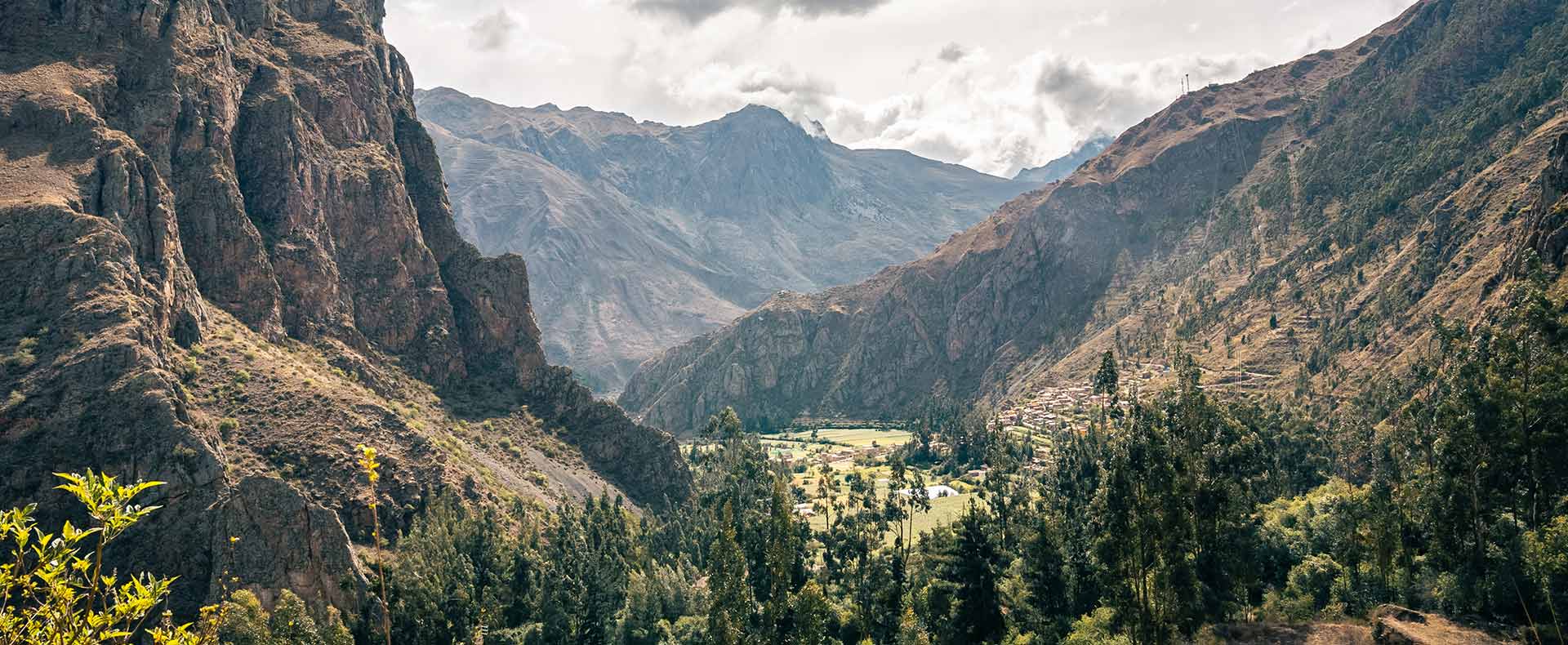
Ollantaytambo is one of the most remarkable places in the Sacred Valley, a living Inca town where history, architecture, astronomy, and nature come together in a landscape that still feels deeply connected to the past.
Set at the meeting point of the Urubamba River and the Patacancha River, Ollantaytambo offers travelers more than an archaeological visit. It is a place where ancient stonework, ceremonial spaces, water channels, terraces, mountain views, and local life reveal the enduring legacy of the Inca world.
For those traveling with us, Ollantaytambo becomes one of the most meaningful cultural stops on the way to Machu Picchu, a destination that invites you to slow down, look closer, and understand the Sacred Valley through a deeper lens.
A Living Inca Town in the Sacred Valley
Unlike many archaeological sites, Ollantaytambo is still alive with daily rhythm and local culture. Its streets, walls, canals, and terraces show the precision of Inca urban planning, where architecture was designed in harmony with the surrounding mountains and rivers.
On the eastern side of town, the Quello Rakay sector reveals beautifully crafted stone structures, open spaces, and water channels that continue to reflect the importance of water in Andean life. These details help travelers understand how the Incas created places that were not only functional, but deeply connected to nature and ceremony.
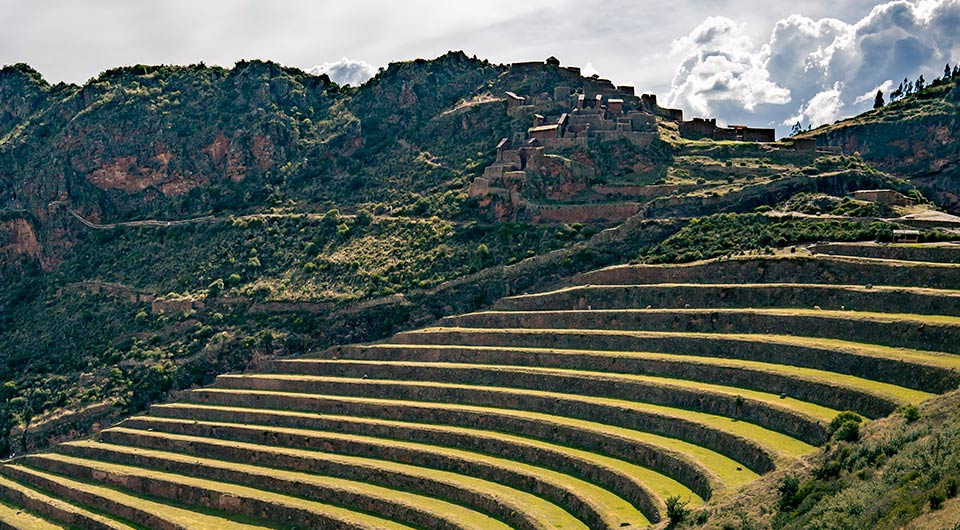
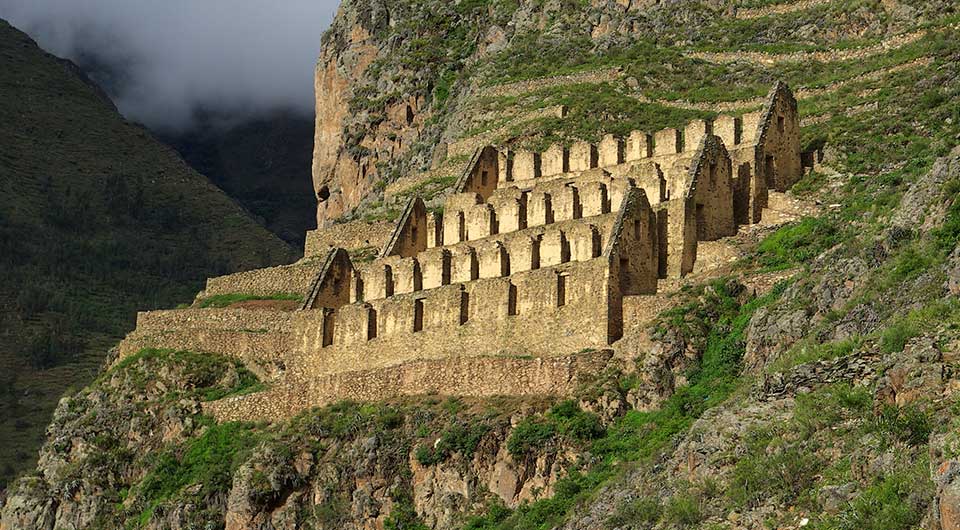
Above the town rises Pinkuylluna Mountain, home to ancient qolqas, or Inca storehouses. Built on steep slopes, these structures were designed to preserve crops such as maize, quinoa, root vegetables, dried meat, and seeds. The wind that moves through this mountain is part of the site’s identity — even giving Pinkuylluna its name, often associated with “the one that whistles.”
Mountain Lodges of Peru offers hikes to this area, where travelers can enjoy a different perspective of Ollantaytambo and take in breathtaking views of this living Inca town from above.
Ceremonial Spaces, Astronomy, and Inca Ingenuity
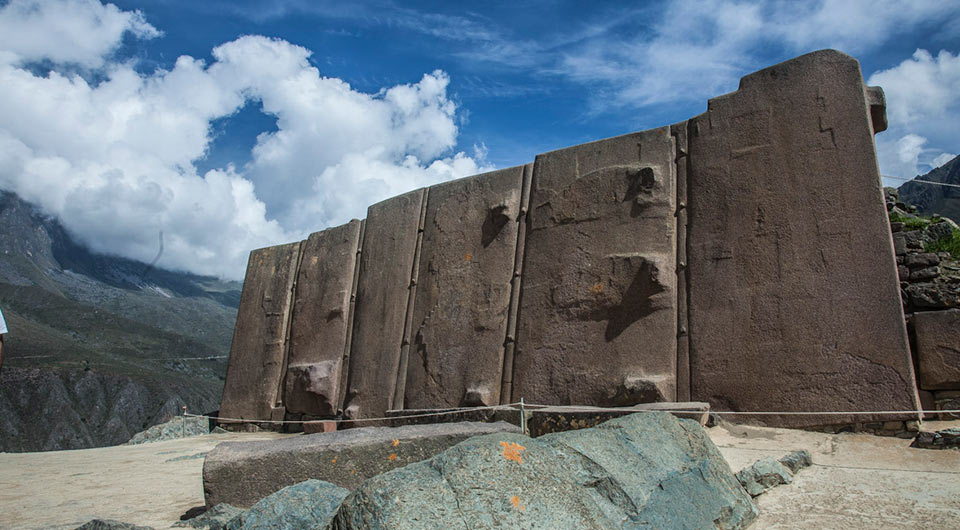
The western side of Ollantaytambo reveals its more ceremonial character. Here, terraces rise dramatically along the mountainside, leading toward sacred spaces and impressive examples of Inca stonework.
Among the most notable areas is the Temple of the Sun, an unfinished megalithic structure positioned with extraordinary precision in relation to the winter solstice sunrise. Nearby, visitors can also observe water fountains, carved stones, and ceremonial spaces that show how closely the Incas studied the movement of the sun, the form of the mountains, and the flow of water.
These details make Ollantaytambo more than a historical site. It is a place where architecture, astronomy, and spirituality meet, offering travelers a glimpse into the vision of builders who understood the Andes not as a backdrop, but as part of the design itself.
Experience Ollantaytambo with Mountain Lodges of Peru
Ollantaytambo is often seen as a stop on the way to Machu Picchu, but with the right context, it becomes one of the most fascinating places in the Sacred Valley. Its terraces, temples, storehouses, water channels, and astronomical alignments reveal the deep relationship the Incas had with the land, the sky, and the forces of nature.
With Mountain Lodges of Peru, travelers can experience Ollantaytambo beyond surface-level sightseeing. Through expert storytelling and carefully curated journeys such as the Upper Sacred Valley and Lares Adventure to Machu Picchu and the Multi-Sport Journey, this living Inca town becomes a powerful connection to Peru’s ancient past, local traditions, and Andean landscapes.
Ready to discover Ollantaytambo and the Sacred Valley beyond the ordinary? Contact us and let our travel specialists help you plan your Peru adventure.